


In manufacturing and product distribution, packaging serves as the first line of defense in protecting product value. When selecting corrugated packaging, companies often focus on the number of board layers – such as single-wall, double-wall, or triple-wall corrugated board. However, another critical factor that determines up to 80% of a carton’s compression strength and cushioning performance is the corrugated flute profile. Understanding the characteristics of different flute types and selecting the appropriate profile for specific packaging applications enables businesses to optimize logistics costs while ensuring maximum product protection.
What is a corrugated flute?
A corrugated flute is the wavy medium formed by passing paper through heated corrugating rolls and bonding it between flat linerboards. From a structural engineering perspective, the flute profile functions as a series of load-bearing arches that distribute external forces evenly across the corrugated board. This design significantly enhances the carton’s ability to withstand edge crush loads (ECT) during stacking and improves resistance to puncture and impact during handling and transportation.
In addition, the air pockets created between the flute peaks and valleys serve as an effective cushioning layer, absorbing shocks and vibrations to protect products from mechanical damage throughout the supply chain.
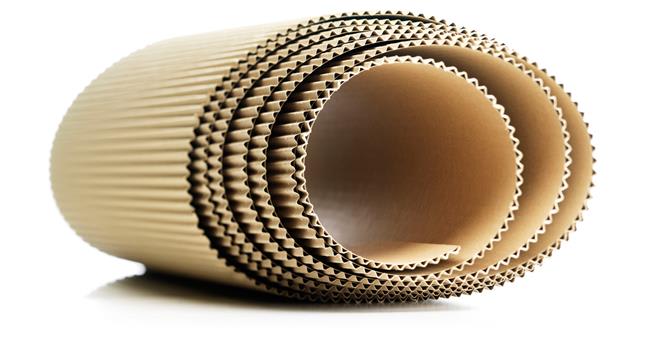
Common corrugated flute profiles
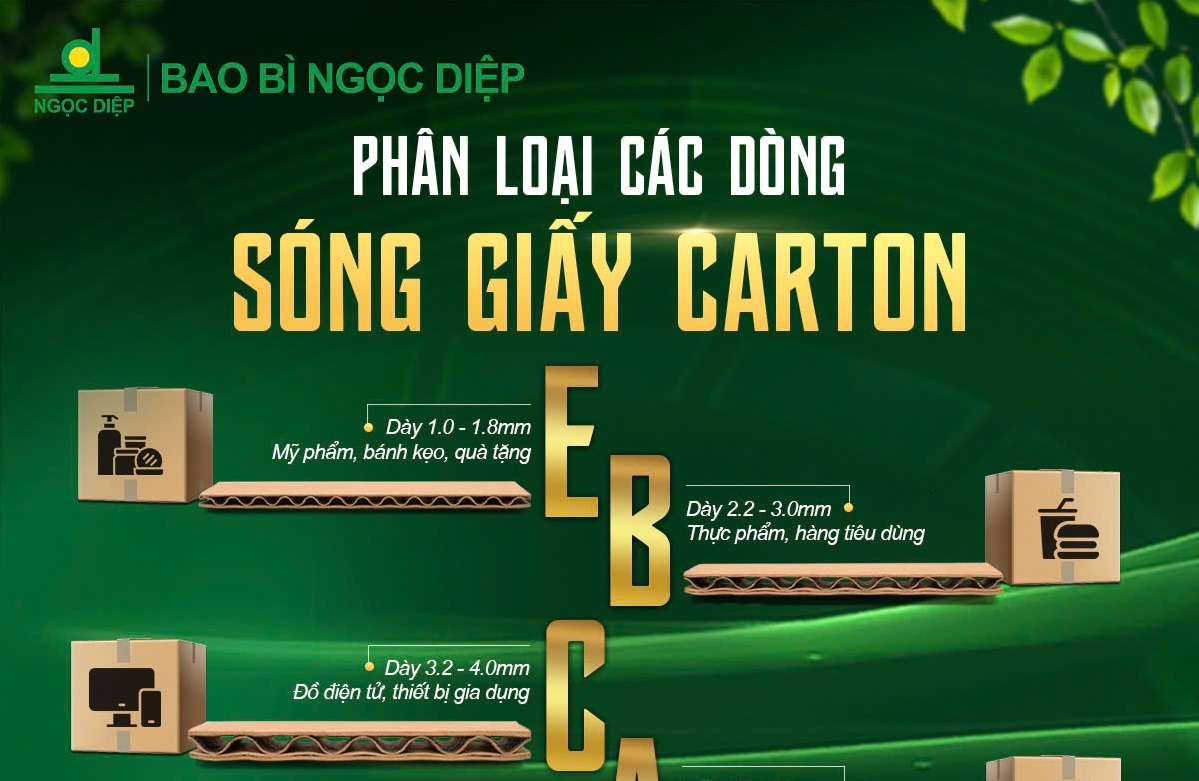
In corrugated packaging manufacturing, flute profiles are classified according to their flute height and number of flutes per unit length. Each flute type exhibits distinct mechanical characteristics that directly influence compression strength, cushioning capability, and print quality.
- A Flute (4.0–4.9 mm): Featuring approximately 33 flutes per 300 mm, A Flute provides the greatest flute height and superior cushioning performance. Its larger arch structure effectively disperses impact forces, reducing localized pressure and minimizing the risk of board failure or puncture. This flute profile is well suited for fragile or highly impact-sensitive products.
- B Flute (2.2–3.0 mm): With approximately 47 flutes per 300 mm, B Flute offers a denser flute structure than A Flute. Its compact profile delivers enhanced puncture resistance and excellent crush resistance, making it suitable for products requiring higher surface durability during handling and distribution.
- C Flute (3.2–4.0 mm): Containing approximately 39 flutes per 300 mm, C Flute balances the cushioning properties of A Flute with the stacking strength of B Flute. As one of the most widely used flute profiles, it is ideal for general-purpose shipping cartons and lightweight to medium-weight products.
- E Flute (1.0–1.8 mm): With approximately 90 flutes per 300 mm, E Flute is the thinnest standard flute profile. Despite its low flute height, its high flute density provides excellent rigidity and a smooth printing surface, making it ideal for lightweight products, retail-ready packaging, and premium printed cartons.
- BC Flute: BC Flute is a double-wall construction combining B Flute and C Flute. This configuration delivers increased board thickness, superior compression strength, and excellent stacking performance, making it suitable for heavier products and demanding logistics environments.
- AB Flute: AB Flute combines A Flute and B Flute to produce a board thickness of approximately 7.4–7.7 mm. This double-wall structure provides enhanced cushioning together with outstanding compression strength, making it ideal for heavy-duty industrial packaging.
- BCE Flute: BCE Flute is a triple-wall construction integrating B, C, and E Flutes. Designed for maximum structural performance, it offers exceptional load-bearing capacity, impact resistance, and product protection for heavy or high-value goods requiring secure transportation over long distances.

Selecting an inappropriate flute profile can either increase packaging costs unnecessarily or expose products to avoidable damage during transportation. Packaging engineers and procurement managers should therefore consider the following three key criteria:
- Product weight and physical characteristics: Evaluate the product’s weight, fragility, dimensions, and sensitivity to impact or compression.
- Transportation and warehousing conditions: Consider stacking height, transportation methods, shipping distance, and storage environment to determine the required compression strength and durability.
- Printing and branding requirements: Select flute profiles that provide the appropriate surface smoothness and print quality based on the intended graphics and printing technology.
Understanding the engineering characteristics of each corrugated flute profile is not merely a technical consideration – it is a critical component of effective supply chain risk management. Selecting the appropriate flute structure based on product characteristics and transportation conditions helps businesses minimize product damage, reduce logistics costs, and preserve product integrity throughout the distribution process.
With modern manufacturing facilities and strong industrial production capabilities, Ngoc Diep Packaging offers a comprehensive range of corrugated flute solutions, from standard single-flute structures to advanced multi-wall combinations such as A, B, C, E, AB, BC… Every corrugated board is manufactured under strict quality control to ensure consistent flute formation and reliable structural performance. Supported by an optimized production system, Ngoc Diep Packaging is committed to on-time delivery, enabling customers to execute their packaging and shipping plans with confidence and efficiency.
Update the latest news from Ngoc Diep Packaging
Other news
How to preserve waterproof carton box during the stormy season
For paper packaging, moisture and water have always been the primary destructive factors. No matter how high the manufacturing standards are, if a carton box gets soaked during transit—due to rain or adverse weather conditions—the paper structure rapidly weakens, leading to rotting and tearing. The consequences go beyond direct damage to the products inside; they […]
11/08/2026
What is ISO 9001:2015? Essence and benefits in the packaging industry
Amid the tightening of global supply chains, ISO 9001:2015 has become a universal language of quality between B2B enterprises. For procurement managers and logistics administrators, this certification is not merely a regulatory passport, but a direct benchmark of a supplier’s operational stability. So, what is the core essence of ISO 9001:2015, and how are these […]
28/07/2026
5 Core Pillars Shaping Ngoc Diep Packaging’s Competitive Edge
The global corrugated packaging industry is standing at a historical paradigm shift. Key takeaways from the Corrugated Packaging Seminar at the FESPA Global Print Expo 2026, held in Spain in May 2026, sent a clear message: The packaging sector is accelerating toward a smarter, fully automated, and data-driven agile future. Artificial intelligence (AI) and smart manufacturing […]
21/07/2026

The E-Commerce Boom Triggers A Super-Cycle Of Growth For The Paper Packaging Industry
The powerful breakthrough of the digital era is profoundly restructuring the global packaging industry’s value chain, particularly in the Asia-Pacific region. The structural shift toward e-commerce has triggered a new “super-cycle of growth” for the paper packaging sector. Amidst this wave, enterprises possessing robust intrinsic capabilities, such as Ngoc Diep Packaging, are well-positioned with vast […]
13/07/2026
Corrugated carton flute types: A guide to choosing the right carton structure for packaging
In manufacturing and product distribution, packaging serves as the first line of defense in protecting product value. When selecting corrugated packaging, companies often focus on the number of board layers – such as single-wall, double-wall, or triple-wall corrugated board. However, another critical factor that determines up to 80% of a carton’s compression strength and cushioning […]
06/07/2026

From over 30,000 tons of recycled packaging to materializing a green packaging future
The global secondary packaging market (outer corrugated boxes, external paper shipping packaging) stands at a historic turning point. A strategic report from Smithers forecasts that the industry is heading toward a massive milestone: reaching £224 billion by 2030. In Vietnam, this wave is no longer a distant future narrative but has manifested as an active […]
25/06/2026

The paper packaging industry enters a promising new growth phase
According to Packaging Knowledge, a strategic report released earlier this year by Smithers confirmed a landmark shift in the global supply chain: the global secondary packaging industry (outer corrugated boxes, external paper shipping packaging) is heading toward a massive milestone of £224 billion by 2030. This exponential growth is no longer driven by traditional retail […]
22/06/2026

